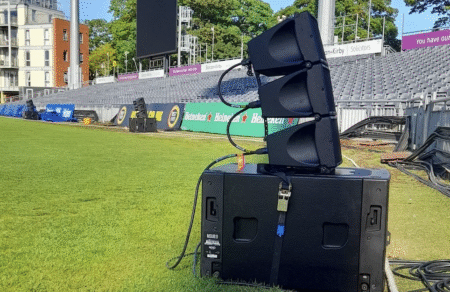


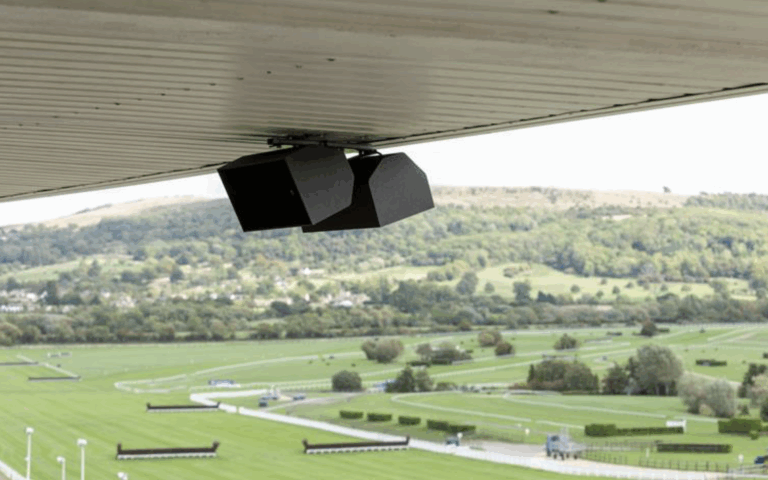
Cheltenham Racecourse, home of jump racing and one of the world’s most prestigious racing venues, has upgraded to a new L-Acoustics professional sound system designed and installed by Audiotek in conjunction with technical service provider Racetech.
The upgrade replaces parts of the existing PA system with a cutting-edge, fully monitored system that delivers uncompromising speech intelligibility for live commentary, background music, race-day announcements and emergency and evacuation messaging – essential for maintaining the excitement and the safety for up to 75,000 spectators across the grounds.
A project three years in the making, the Jockey Club, which owns and operates Cheltenham Racecourse along with 14 other racecourses across the UK, selected Audiotek following a competitive tender process managed by audio consultant Stuart Strachan of RaceTech, who specified strict performance criteria for the new system based on the British Standard BS 7827.
“Cheltenham is one of the jewels of the Jockey Club portfolio, and it was important that the new system matched the heritage and prestige of the venue while meeting modern performance and compliance standards,” says Chris Kmiec, Project Manager at Audiotek. “The brief was all about clarity – ensuring every word of the live commentary is heard precisely.”
“The crowd at Cheltenham is one of the loudest in racing – the “Cheltenham Roar” at the start of the Festival is famous – so it was vital that we selected a system which would play in harmony with, not fight against, the atmosphere of the enthusiastic crowd” explains Strachan.
Meeting BS 7827 standards with L-Acoustics technology
The replacement of Cheltenham’s ageing system was driven by the need to comply with BS 7827, the British Standard code of practice for designing and operating emergency sound systems at sports grounds and large public venues. This standard ensures that voiced messages remain intelligible in all parts of a venue during both routine operations and emergencies, defining requirements for speech intelligibility and sound pressure levels. The old installation no longer met these modern standards, particularly in maintaining clarity during live race commentary, a defining part of the race-day experience.
The architectural and environmental challenges of the site added further complexity. Cheltenham’s grandstand, built in the 1970s, features exposed façades, balconies, and variable crowd densities, requiring precise control of coverage and SPL uniformity. Weatherproofing was also a crucial consideration, with the system needing to operate safely and consistently in open-air conditions.
“The goal was not just to meet compliance but to enhance the spectator experience,” explains Kmiec. “Horse racing commentary is continuous and dynamic; every word has to cut through the crowd without sounding harsh or fatiguing. We needed a solution that could deliver power, precision, and clarity in equal measure.”