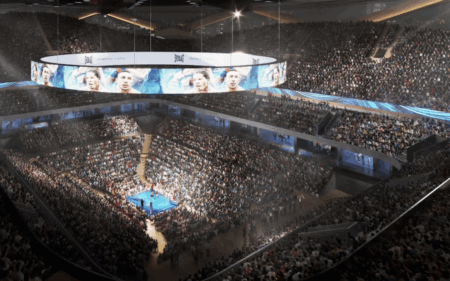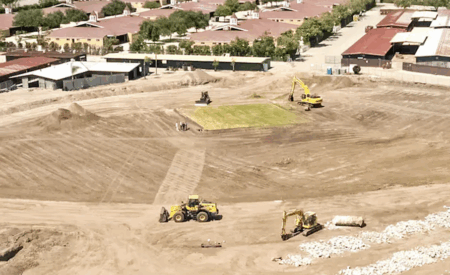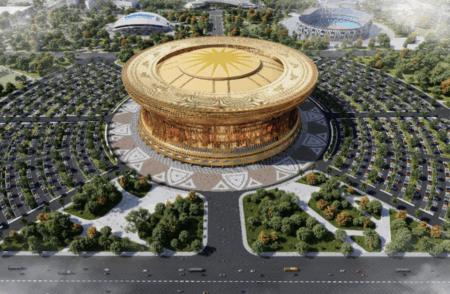


AC Milan and FC Internazionale Milano have announced that the Milan City Council has granted preliminary approval for the sale of San Siro Stadium, officially known as the Giuseppe Meazza Stadium, one of Italy’s most celebrated sporting landmarks. The redevelopment is reportedly led by Foster + Partners and Manica, with the new stadium intended to set fresh benchmarks in design and sustainability.
Located approximately six kilometres from central Milan, San Siro ranks among Europe’s largest and most recognisable stadiums. The venue was spared from demolition in 2023 after the Regional Commission for the Cultural Heritage of Lombardy formally recognised its historic and cultural significance.
In a joint statement, the clubs confirmed that the city’s latest decision paves the way for the design of a new, international-standard stadium, to be developed alongside an ambitious urban regeneration project for the surrounding district.
The announcement comes just months ahead of the Milano-Cortina 2026 Winter Olympics, an event that is expected to mark the beginning of San Siro’s farewell as an active venue.
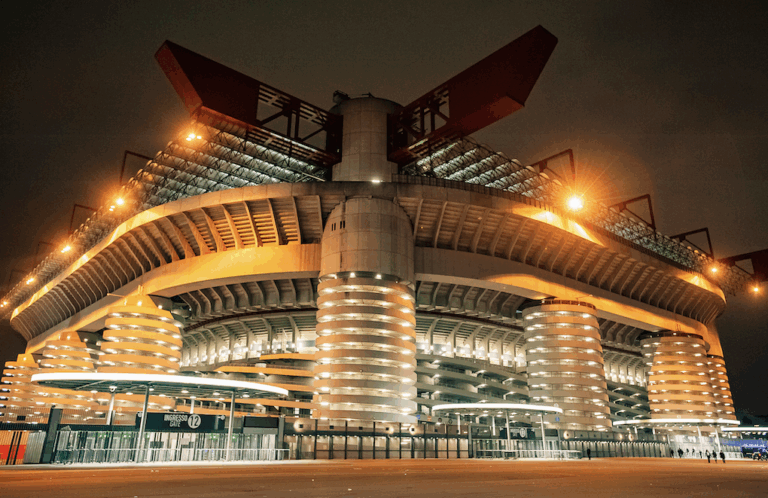
Inaugurated on 19 September 1926 and originally inspired by English stadium architecture, San Siro first featured four straight grandstands accommodating 35,000 spectators. The City of Milan acquired the facility in 1935, expanding its capacity by linking the stands with four curved sections. A major renovation in 1955 introduced a new load-bearing structure, increasing capacity to 85,000 and adding the distinctive helical ramps that have since defined its silhouette.
Over the decades, San Siro has evolved into a multi-purpose cultural venue, hosting not only matches for AC Milanand Inter Milan, but also international football fixtures and world-renowned concerts. It currently meets UEFA Category 4 standards, the highest classification for European football venues.
Architecturally, the stadium is supported by four corner towers and seven intermediate towers, which carry prestressed concrete box beams supporting the seating tiers. The corner towers extend beyond the stands to uphold the stadium’s roof structure, forming part of the arena’s distinctive profile.