

Fans attending this summer’s World Cup will have access to sensory rooms at every stadium across Canada, Mexico and the United States.
The initiative makes the tournament the first major sporting event to receive Sensory Inclusive certification from KultureCity, a non-profit organisation specialising in sensory accessibility and inclusion.
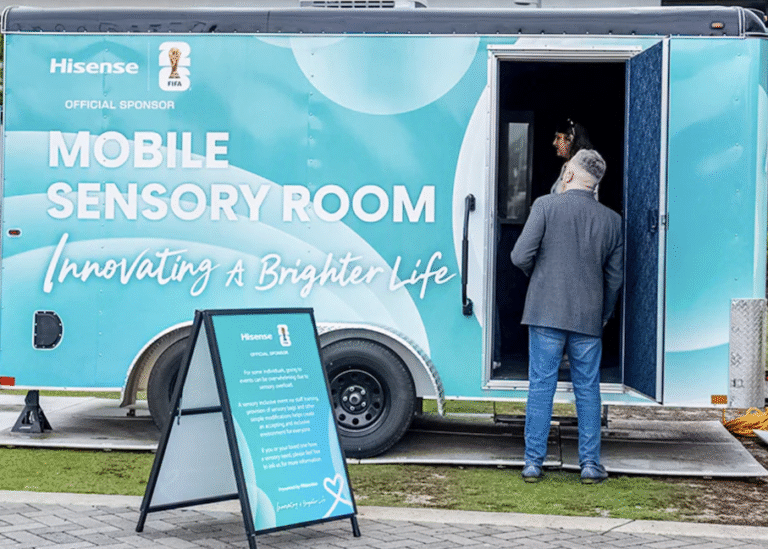
Developed in partnership with FIFA Commercial Partner Hisense and with support from KultureCity, the project is designed to make the World Cup more accessible for supporters with sensory processing needs.
“Football unites the world, and it is our goal to help everyone participate in the sport, whether as a player or a fan,” said Heimo Schirgi, COO of the FIFA World Cup 2026. “We are proud that the FIFA World Cup 2026 is the first tournament to receive the Sensory Inclusive designation. These resources will help fans with sensory needs enjoy the beautiful game in person at what promises to be the greatest FIFA World Cup yet.”
Research suggests that between 5% and 16.5% of people experience sensory processing challenges. For some supporters, the noise, movement and intensity of a live sporting event can create an overwhelming environment that limits their ability to attend and enjoy matches.
The introduction of sensory rooms aims to address those barriers and reflects a growing focus on accessibility at major sporting events.
Available to ticket holders at all 16 World Cup venues, the dedicated spaces will provide a calm environment for supporters who experience sensory overload, including individuals with autism, anxiety, post-traumatic stress disorder, dementia and other conditions.
Located within the stadium footprint, the rooms will allow fans to step away from the excitement of matchday and regulate their sensory experience before returning to their seats.
Each sensory room will feature reduced noise levels, dimmed lighting, comfortable seating, tactile resources and Hisense televisions displaying calming visual content