

Sustainability is increasingly influencing how organizations think about purchasing decisions; not only what they bring into a facility, but what those choices mean over their full lifecycle.
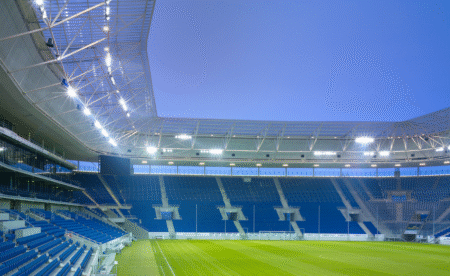
A stadium restroom renovation brings that idea into focus. At scale, operators aren’t simply choosing what goes into a newly renovated space. They’re also deciding what happens to the equipment coming out, how replacement systems will perform over years of use and what those choices could mean for waste along the way.
Those considerations don’t replace the fundamentals of a successful renovation. Fan experience and operational performance still matter. The opportunity is to consider sustainability alongside them from the start.
Look at the full lifecycle of the renovation
When we talk about making more sustainable purchasing decisions, much of the attention naturally goes to the new solution: the materials it contains, how it is manufactured or how it performs during use. Renovation introduces another important consideration; what is being replaced.
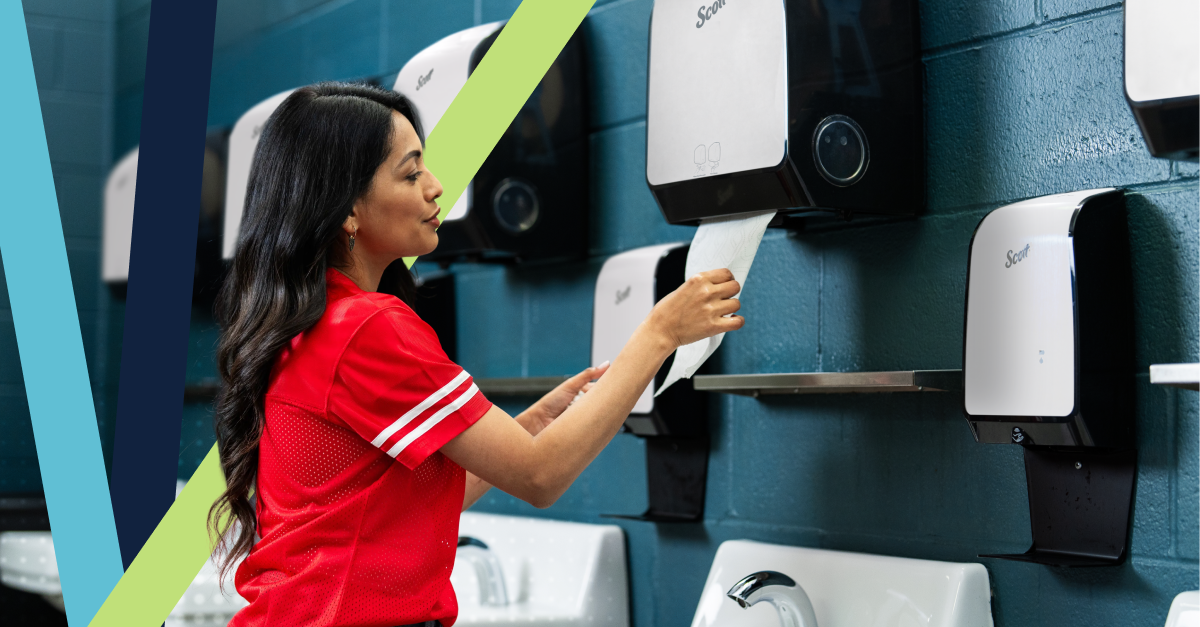
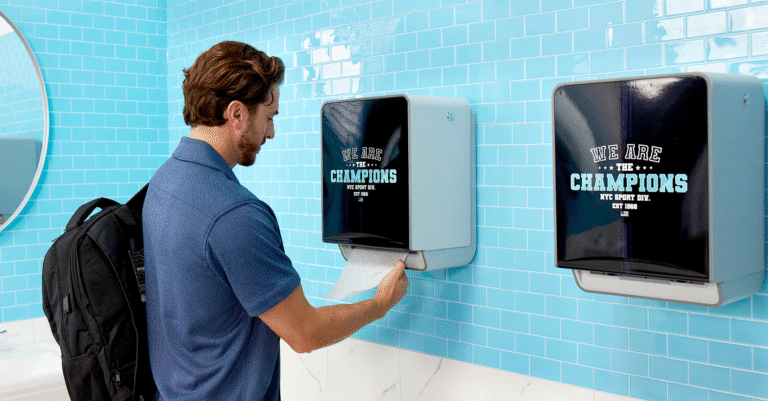
ABOVE: sustainability is increasingly influencing how organizations think about purchasing decisions
Across a large venue, a restroom remodel can mean removing a significant number of existing dispensers and other equipment. Without a plan for those materials, landfill can easily become the default destination.
That is why a more sustainable restroom renovation can begin before new equipment ever goes on the wall.
Operators can start by understanding what will be removed and working with suppliers and other partners to determine whether reuse, recycling or other diversion pathways are available. Not every material will necessarily have an alternative end-of-life option, but those conversations are much more productive when they happen before equipment has been removed and entered the general renovation waste stream.
It’s a relatively simple shift in thinking: don’t only ask what you’re putting into the renovated space. Ask what is happening to what you’re taking out. At the scale of a stadium, that question can matter.
Make sustainability part of the same decision
Of course, environmental considerations are only part of what venue operators have to evaluate.
Stadium restrooms face an operational reality unlike many other high-traffic facilities. Demand isn’t simply high; it’s concentrated. A restroom that sees relatively little traffic during play can experience a dramatic surge at halftime, between periods or immediately following an event.
Facility teams already understand those pressures. The sustainability opportunity isn’t to ask them to put those operational needs aside. It’s to broaden the criteria being considered when replacement decisions are made.
“For me as a facility manager, sustainability means finding ways to operate the arena more efficiently while reducing our environmental impact,” says Stuart Ascher, facilities services manager, State Farm Arena. “It’s about doing the right thing for our community and for the future, but it’s also about making smart operational choices.”
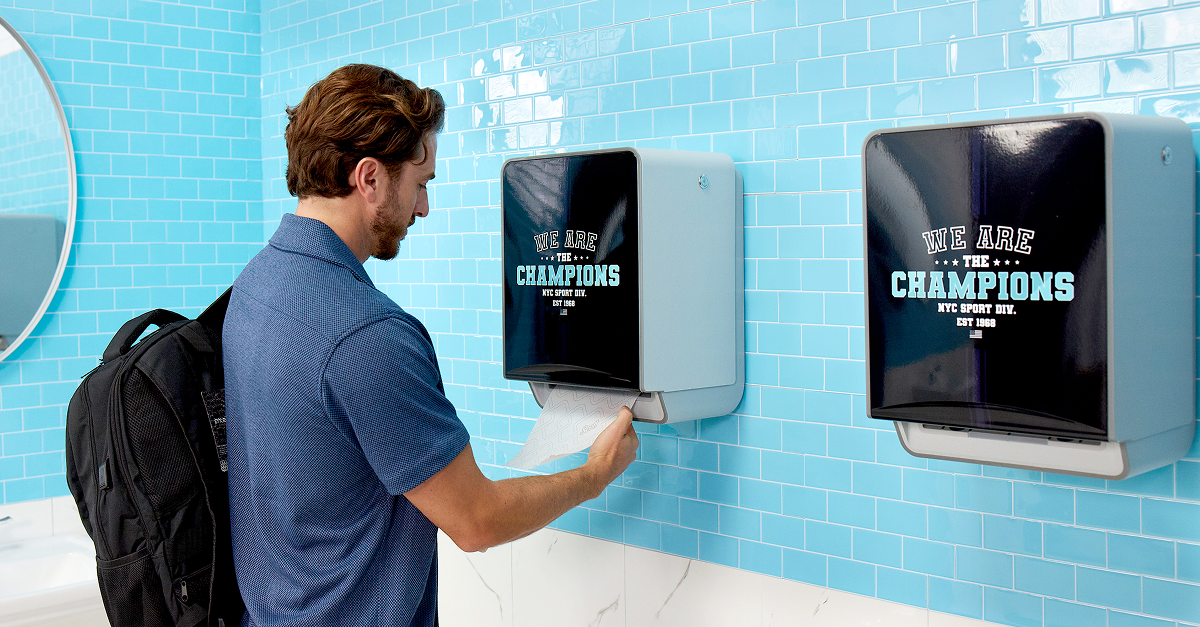
ABOVE: sustainability means finding ways to operate the space more efficiently while reducing environmental impact
Capacity, product availability, replenishment needs and ease of servicing all matter in an environment where thousands of fans may use restrooms within a short period. So do product consumption, packaging, waste and end-of-life considerations.
Operators may also consider sustainability attributes such as recycled content, third-party certifications, the use of renewable energy in manufacturing and where products are manufactured.
These considerations don’t have to compete with performance. A system still has to meet users’ needs when the venue is busiest, make sense for the employees maintaining it and deliver the experience fans expect. Considering sustainability alongside those requirements can help operators evaluate the broader impact of a decision they’ll be living with for years.
Think beyond the initial purchase
That longer-term perspective is particularly important during renovation. Replacing restroom systems across a stadium isn’t an everyday purchasing decision. Once those systems are installed throughout concourses and levels, they can influence how the facility operates and what it consumes over many event seasons.
The sustainability considerations surrounding that decision don’t stop at installation. Over time, the systems selected can influence product consumption, replenishment requirements, packaging and ongoing waste streams. Individually, some of those differences may appear small. Multiplied across a large venue, thousands of fan interactions and years of operation, they can become much more significant.
This is where looking at sustainability through a lifecycle lens can be useful. Instead of evaluating a solution only at the point of purchase, operators can consider what it means throughout its use: What resources will be required to keep it operating? What waste streams will it create? How does it fit into the venue’s broader waste strategy? And eventually, what options may exist when that system reaches the end of its own useful life?
It is a broader way of evaluating value, one that considers what happens before, during and after a product is in use.
Bring suppliers into the conversation
As sustainability becomes part of more purchasing decisions, the questions organizations ask their suppliers are evolving, too.
A supplier’s role can extend beyond providing product specifications. Suppliers may also be able to help customers understand material choices, consumption and waste considerations, available end-of-life pathways or opportunities to responsibly manage equipment being replaced.
For venue operators, renovation is a natural time to have those conversations. Ask what happens to the existing equipment. Ask about the materials and waste implications associated with the replacement system. Ask what options may be available to help divert eligible materials from landfill. And consider how those answers fit alongside the operational requirements the venue has already established.
The answers won’t be identical for every facility, product or waste stream. But asking earlier creates more opportunity to identify what’s possible.
It also sends an important signal to the market. When customers begin asking suppliers about lifecycle impact and end-of-life options alongside performance and value, those considerations become a more meaningful part of how solutions are developed and brought to market.
Connect sustainability to the fan experience
For fans, most of this work will remain invisible – and that’s not necessarily a bad thing. A fan doesn’t need to know how restroom equipment was diverted during a renovation or how a venue evaluates its consumable waste streams. They do need restrooms to be available, stocked and functioning when thousands of people head for the concourse at once.
That is an important reminder about sustainability in the built environment: the strongest solutions have to work in the real world.
For stadiums, that means sustainability can’t come at the expense of the operational performance needed to deliver a positive fan experience. The opportunity is to find areas where those objectives can reinforce one another.
A renovation provides a particularly valuable moment to do that because operators have an opportunity to reconsider decisions that may remain in place for years.
Use renovation as a decision point
The most visible result of a restroom remodel will always be the new space. But some of the most meaningful decisions may be the ones fans never see.
What happened to the equipment that was removed? What will the new systems mean for consumption and waste over time? How will they perform during the busiest moments of an event? And what happens when those systems eventually need to be replaced again?
Those questions reflect a broader evolution in how organizations are approaching sustainability. The focus is expanding from individual product attributes toward understanding impact across a fuller lifecycle.
Stadium operators don’t have to choose between a better fan experience, strong operational performance and progress toward sustainability objectives. A thoughtful renovation can consider all three.
And the best time to start is before the first dispenser comes off the wall.