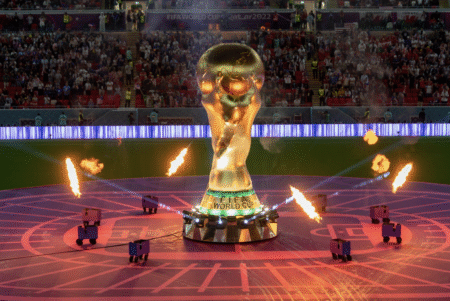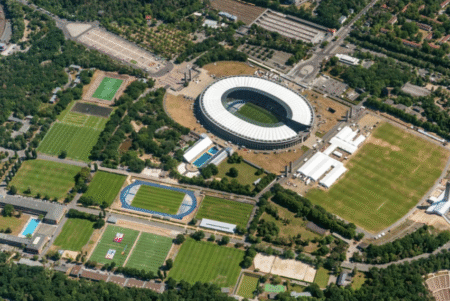


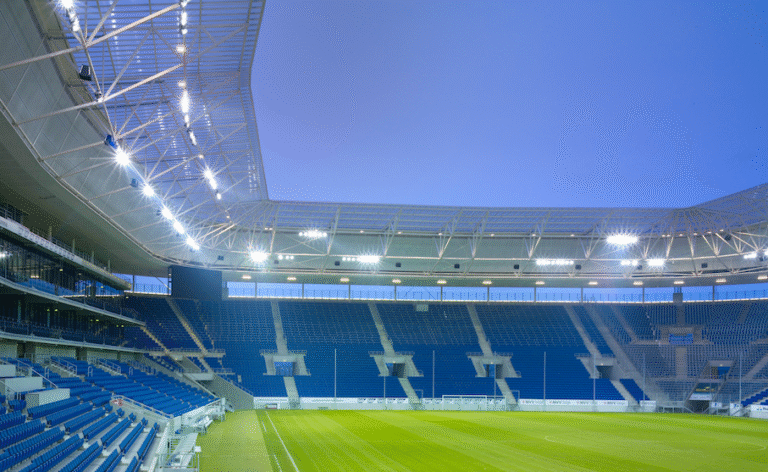
In 2026, stadiums are taking centre stage, with major sporting events such as the football World Cup drawing crowds in their tens of thousands to enjoy the spectacle and soak up the atmosphere. Operators, on the other hand, are fully focused on keeping people safe and venues ready for the global spotlight – and that means factoring in foundational project elements, such as protective coatings and flooring, from the very start.
The modern world demands a lot from stadiums. They need to stand up to eye-watering volumes of footfall, provide clear sight lights and an exciting atmosphere, all while remaining clean, safe, and aesthetically pleasing. And they need to deliver all this repeatedly, often across back-to-back events, which makes structural integrity, public safety, operational resilience, and a broadcast-ready appearance non-negotiable.
As stadium owners and operators prepare for a new era of global sporting events, the pressure is on to deliver venues that are safe, durable, visually impressive, and ready to perform under intense public scrutiny. These are not straightforward projects. Teams are working to strict deadlines, with no margin for error, to ensure venues are completed and operational ahead of planned events.
Protective coatings and flooring are a foundational element of the overall equation, providing functions such as fire and corrosion protection, slip resistance, aesthetics and wayfinding. Yet despite being part of the very fabric of the building, decisions around them are often left too late. The results are missed completion deadlines, the need to close down and re-do work later on, and, ultimately, missed opportunities.
Complex considerations
Stadiums are unlike any other infrastructure project. They operate like a small town, with tens of thousands of people attending at any one time, and dozens of different areas with different uses. As such, corrosion and fire protection, as well as flooring requirements, have to be individualised to the project.
Stadiums need passive fire protection for steel structures and load-bearing elements. When exposed to extreme heat, intumescent coatings form an insulating layer that protects the steel for a specified period of time. In the event of a fire, this ensures structural integrity during the evacuation of a stadium-sized crowd. However, there is no-one-size fits all solution to passive fire protection, and intumescent coating specification has to be performed as part of a broader system approach. The correct technology for your project will depend heavily on factors such as regional regulations and the size of the stadium, the desired speed of evacuation and the volume of exposed steel, as well as the project-specific needs for durability and method of application. Intumescent coatings have various chemistries designed to meet a wide range of project requirements. Multi-component methyl methacrylate (MMA) technology, for example, offers an advanced, ultra fast-curing in-shop applied and durable solution for passive fire protection. In C4 and C5 environments, 2-pack epoxy technology provides ultimate durability and weather resistance, while 1-pack solvent-based solutions are key cost-effective and efficient solutions and water-based solutions can help support lower VOC requirements.
Exposed structural elements also need protection against the electrochemical process that lead to rust. Specialist anti-corrosion coatings shield steel from the surrounding environment, mitigating the risk. With the required coating specification being dependent on exposure levels, however, determining product and application needs can be challenging. ISO 12944, the industry standard for corrosion protection of steel structures by protective paint systems, classifies need based on factors such as location, use, and atmosphere. What complicates things further is that one stadium could fall into multiple ISO 12944 categories. While offices and canteens, for example, may be C1, or very low risk, outdoor spaces like the arena may be C5, or very high risk, especially if in a coastal area. Selecting a coating system that aligns with the relevant ISO 12944 environment classification is critical to achieving long-term corrosion protection and reducing maintenance requirements.
Behind every stadium is a complex network of mechanical, electrical and plumbing services that keep the venue operational. Corrosion under insulation (CUI) on pipework and thermal systems can remain undetected for years, increasing maintenance costs and operational risk. Protecting these critical assets helps ensure reliability, uptime and long-term performance. High heat coating solutions help protect piping and mechanical systems from corrosion, extreme temperatures, and operational risks, reducing maintenance and extending asset life.
Flooring decisions come with equally complex considerations. Each one of the multitude of different areas that make up a stadium will have different needs and considerations. Selecting the appropriate system for each zone can reduce maintenance costs while supporting smooth venue operations throughout the asset lifecycle. Flooring systems also contribute to public safety, cleaning efficiency, and asset longevity.
Resin floors are seamless, polymer-based surfaces which are applied in liquid form directly to a prepared surface and cure chemically to form a durable, abrasion-resistant finish. The chemistry and thickness of the system will dictate its performance, such as cleanability, the types and volume of traffic it can manage, and slip resistance. A locker room or a concourse, for example, will have very different flooring requirements to a car park or a delivery bay.
What’s more, different flooring systems have different application and drying times. If this is not factored in from the start, it can lead to unexpected delays. Opting for a fast-drying solution means minimal downtime and a faster path to project completion.
Another common consideration is colour scheme and way finding. Venues will have very exacting requirements regarding the finished look of the stadium, often aiming to reflect brand or corporate colours. As aesthetic and directional colours are applied over the top of coatings and floorings, making sure they are compatible up front will save headaches and delays later on in the project.
Modern stadium projects are increasingly being designed around sustainability objectives. Protective coatings and flooring systems can contribute through longer service life, reduced maintenance requirements, lower emissions during application, and support for green building certifications such as LEED and BREEAM. Selecting durable systems at the design stage can help reduce lifecycle costs while supporting environmental goals throughout the life of the venue.
Strong foundations
Understanding the right approach for your stadium, then, is incredibly complex. But these are foundational elements of the structure, and if they are not considered and planned from the start, they can hold up the entire project.
That’s why protective coatings and flooring should be built into venue design from the very beginning. It is about ensuring public safety, enhancing operational resilience, and minimising expensive delays.
***
Sherwin-Williams is a leading global paint and coatings manufacturer with more than 64,000 employees across more than 120 countries. In its 150-year-plus history, Sherwin-Williams has been committed to enhancing our customers’ operations and accelerating their business growth with innovative, high-performance coating solutions, world-class industry expertise, and unparalleled technical, specification and commercial service. The Sherwin-Williams Protective & Marine Division delivers smart asset protection to customers in a wide array of markets, including Passive Fire Protection, Oil and Gas, Water and Wastewater, Bridge and Highway, Steel Fabrication, Flooring, Food and Beverage, Mining, Rail, Marine as well as Power Generation.