

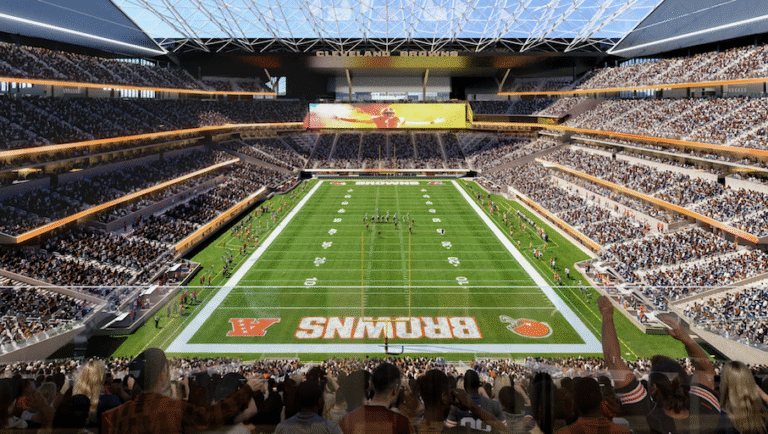
The Cleveland Brown’s new $2.6 billion NFL stadium, which broke ground on 30 April and is scheduled for completion ahead of the 2029 season, will be fitted with artificial turf.
Given how early the project remains, there is plenty of scope for the specification to change before a final surface is laid. But should the current plan hold, it would nudge the league’s turf-versus-grass split out of equilibrium: 17 clubs would play home fixtures on synthetic surfaces against 15 on natural grass, compared with today’s even 16-16 split, in which the Browns currently sit on the grass side of the ledger.
The timing is pointed. The perennial grass-versus-turf argument has rarely been louder than it is right now, fuelled by this summer’s World Cup, which required eight NFL venues to temporarily lay natural grass over their usual artificial surfaces to satisfy FIFA’s playing-surface requirements. The NFL Players Association seized on the tournament to press its long-running case for wider grass adoption, running a coordinated #WorthTheCost campaign timed to the World Cup Final; the hashtag was picked up widely by players across social platforms, alongside the union itself, as a show of preference for grass.
Cleveland’s new build has reportedly been designed with the “ability to accommodate grass”, though that flexibility looks likely to be exercised only if the venue ends up staging soccer fixtures rather than NFL games.
Other current stadium projects underline just how unsettled the issue remains league-wide. The Bills went the opposite way from the Browns, switching from turf to grass for their newly opened stadium, which hosts its first regular-season game on 17 September. Meanwhile, the Chiefs have yet to settle on a surface for their planned domed stadium, leaving one of the league’s marquee franchises still undecided.